Fresh: Scottsdale Kitchen Remodeling: The Low Voltage Layer and What Will Date

Nationalvideogamearchive

Cabinet refacing and new cabinet installation for Scottsdale kitchens, starting with an honest look inside the boxes.

(480) 637-3170

Gray shaker kitchen cabinets with a white quartz island, gold faucet and brass pendant lights

Cabinet Refacing, Scottsdale

Keep the Cabinet Boxes, Change Everything You Can See

Plenty of Scottsdale kitchens get torn out over cabinets that are structurally fine. We open the doors, check the boxes, and tell you whether refacing or new cabinets make sense before anyone prices a demolition.

Box inspection before any quoteRefacing and new cabinets both offeredExisting countertops can often stay

Cabinet Notes From Scottsdale Kitchens

What we look for inside cabinets, and when a bigger remodel is money well spent.

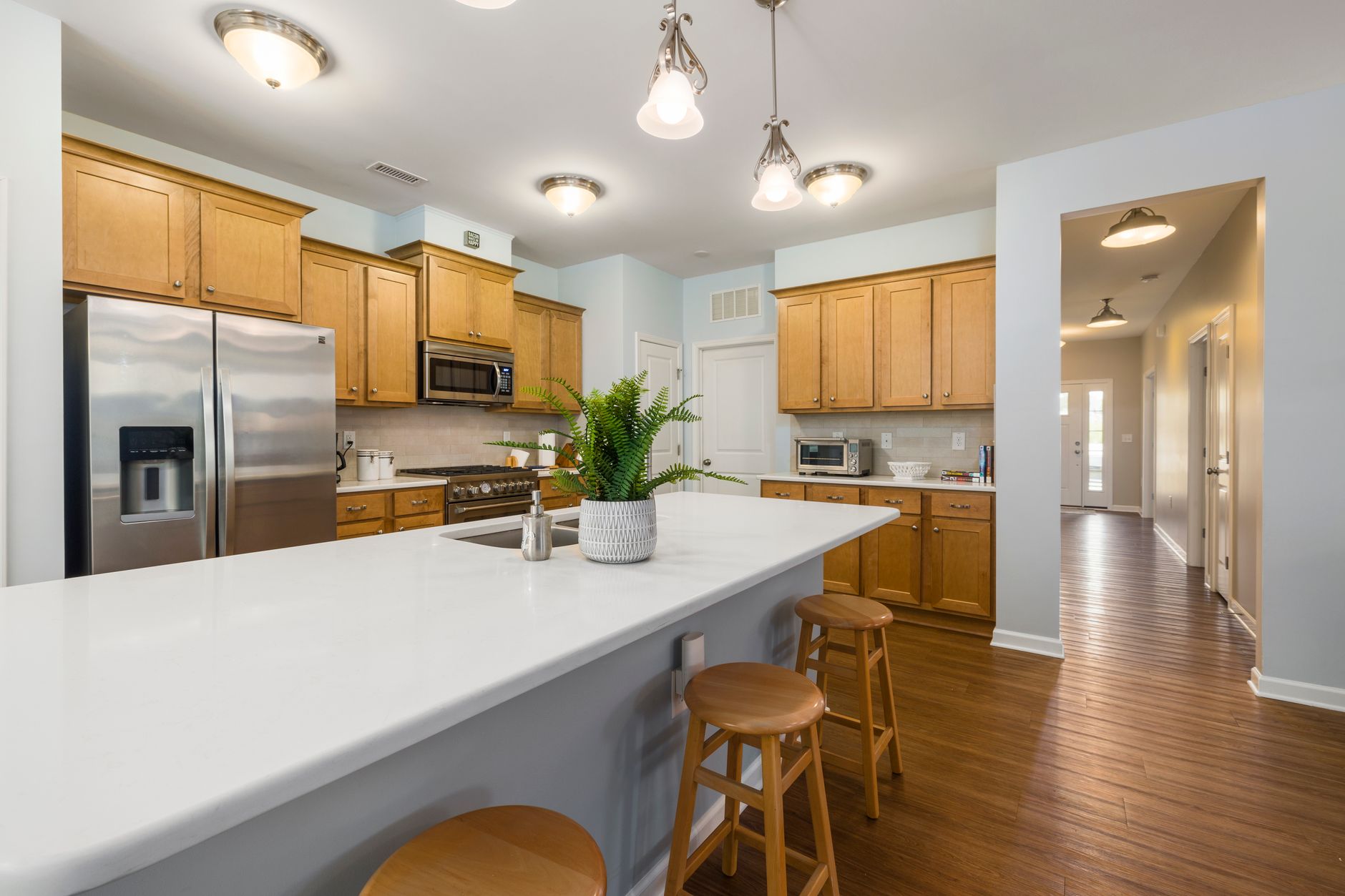
Contemporary kitchen with wooden cabinets, white countertop, and stainless steel appliances in Scottsdale, AZ

Scottsdale Kitchen Remodeling: The Low Voltage Layer and What Will Date

Plug a console from the late nineties into a television and it still plays. Plug in one sold eight years ago and a third of what it advertised is gone, because the online service that carried those features was switched off and the features lived there rather than in the plastic box on the shelf. The hardware outlasted the company's interest in it. That is the normal outcome for anything whose usefulness depends on a server somebody else pays for, and it is now the bet being placed inside kitchen cabinetry.

A kitchen is a twenty year object with five year electronics bolted into it. Appliances get replaced, control apps get discontinued, and the wiring stays exactly where an electrician put it on one Tuesday before the drywall went up. The pattern worth copying from preservation work is simple: keep the function in the device, keep the path to the device open, and never let a convenience feature be the only way to operate something.

That separation is cheap to build in and close to impossible to retrofit. Crews handling kitchen remodeling throughout scottsdale will pull whatever the plan asks for while the studs are bare, and almost nothing afterwards without cutting a finished wall, so the low voltage decisions have to be made weeks before anybody is thinking about them. They arrive in the same hour as paint colours and get the attention paint colours deserve.

The hour that decides the next twenty years

Rough-in is the only window. Before drywall, a cable costs the length of the cable. After tile and cabinets, the same cable costs a wall.

The list below is not about what gets installed now. It is about keeping options alive.

  • A length of smooth wall conduit from the kitchen to wherever the house's network equipment lives, with a pull string left inside it and both ends terminated in accessible boxes. Conduit is the item that makes every later decision reversible, and nobody regrets one.
  • Low voltage boxes behind each place a screen, a panel or a speaker might ever go, with the conduit reaching them, even when nothing is being mounted today.
  • A deeper box than needed at each switch location. Device depth has only gone one direction, and a crowded box is where the next electrician gives up and surface mounts something.
  • Blocking in the wall and ceiling at every point something might later be screwed to, since drywall anchors and a heavy fixture are a bad pairing.
  • Photographs of the open walls and ceiling, dated, from a fixed spot in the room, before the drywall arrives. The person who has to find a cable in nine years is the one who benefits, and that person may well be you.

None of that is technology. It is the absence of technology, in the places technology might want later.

Under cabinet light is a system with a service life

Tape or strip lighting is sold as a fixture and behaves like a system. There is an emitter, a driver that converts line voltage down, a dimming method, and a connector standard between them. The emitter usually outlives the driver, and the driver is the part that fails.

So the question at rough-in is not brightness. It is where the driver lives and whether a person can reach it with a screwdriver without removing a cabinet or breaking a tile joint. A driver buried above a soffit behind a sealed panel is a future repair quoted as carpentry.

Two more things that decide whether a replacement is possible at all. Write down the driver's output voltage, its wattage and its dimming method, and keep that note with the house papers, because a generic replacement in a standard size is available for years while a proprietary module tied to one cabinet brand is available until that brand changes its line. And confirm the dimmer and the driver are a listed compatible pair, specified together, since mismatched pairs flicker at low output and the flicker gets blamed on the lamp.

A cable beats a strong signal, especially here

Connected appliances talk over home Wi-Fi, which means a laundry room router and a kitchen oven are separated by whatever is between them. In a typical house here that includes stucco over metal lath, which reflects a good share of the signal, and often a masonry block wall outside. Reflective wall assemblies are the reason a phone shows a decent signal standing in the kitchen and the oven at the back wall reports itself offline every few days.

The fix is a wired drop. Two runs of category cable into the kitchen, one terminated near the appliance wall and one high on a wall or in the ceiling for an access point, solve a problem that no amount of router shopping solves. A wired access point placed in the room itself is the difference between a network that covers the kitchen and a network that reaches toward it.

Most connected appliances only join the slower, longer range radio band, so put the access point where that band can actually land, and keep the appliance's own radio off the guest network it will be banned from when somebody changes the password.

Heat is the quiet killer of anything with a circuit board

Electronics age by temperature. Capacitor life roughly halves for every ten degrees Celsius above the rating, which is why identical equipment lasts for years in one spot and dies in two summers in another.

An attic in Scottsdale is the worst available location for anything electronic. Air temperatures in an unconditioned attic in July sit far above anything a consumer device is rated for, all afternoon, for months. Network equipment, lighting drivers, a smart relay, a doorbell transformer, an audio amplifier: every one of them belongs inside the conditioned envelope. A hall closet, a laundry wall, the inside face of a pantry. Never above the insulation, and never in the garage ceiling of a west facing house either.

The same logic applies to a wine cabinet or a beverage fridge boxed into cabinetry with no airflow. Those compressors reject heat into the cabinet they sit in, and a sealed enclosure in a hot climate shortens their life to a fraction of the published figure. Ask for the manufacturer's clearance numbers and have the cabinet shop build to them.

What still works after the app is gone

A plain test separates a feature from a service. Ask whether the thing works with the house internet unplugged. If it does, it is a function of the appliance. If it does not, you are renting it.

Induction cooking, convection, a wired temperature probe, steam, a self clean cycle and a soft close hinge all live in the appliance and keep working forever. Remote preheat, phone notifications, recipe downloads, interior cameras, voice control and firmware delivered updates all live on somebody's server, and every one of them has been withdrawn from some product line already. That is not a reason to avoid them. It is a reason not to pay a premium that only buys them, and not to let them be the only control path.

Where a connected feature is genuinely wanted, prefer open standards over a single vendor's cloud. The current direction of travel in home automation is interoperable local control, meaning devices that respond to a controller inside the house rather than a round trip to a data centre, so a device that supports a widely adopted standard has a route to being usable under some future controller nobody has built yet. A device that only speaks to one company's application has exactly one future.

Every automated thing keeps a dumb override

This is the rule that matters most, and it is also the cheapest.

A touchless faucet keeps a normal handle. Motorised shades keep a wall switch or a manual pull. Lighting keeps a physical switch on the wall that works with no hub, no phone and no account, because the house has guests, children, visitors and eventually a buyer, and a dark kitchen that requires an application is a defect. An appliance keeps its own front panel controls.

The wall mounted control panel deserves naming directly. A tablet set into a niche is used enthusiastically for a few months, then the household goes back to phones, and in year four it is an obsolete device grouted into a wall. If a wall screen is wanted, use a standard mount and a replaceable device, not a custom niche sized to one model that stopped being made.

Induction, solar and when the power is actually cheap

An induction range is worth planning for even if the current one is gas, which means a dedicated high amperage circuit and the right receptacle, run now while the wall is open. The cable is the expensive part and it only gets installed once.

Pairing that load with rooftop solar is where expectations need adjusting. The range draws hardest around dinner, late in the day, when local solar output is falling off and utility pricing is usually at its peak. Household solar does not cover the cooking peak unless there is storage behind it. The honest version is that induction is quicker, cleaner indoors and removes a combustion source from a tightly built house, and the energy bill arithmetic depends on the rate plan rather than on the panels.

Three things to skip

A built in wall tablet with a custom niche. An appliance bought mainly for its interior camera or its inventory tracking. And a proprietary lighting ecosystem whose wall controls only work with its own bulbs, which turns a dead product line into a rewiring job.

What survives in a kitchen is the plumbing, the wiring, the cabinet boxes and the conduit somebody had the sense to leave empty. Build those for twenty years, label the panel and the driver locations, keep the photographs, and let the clever parts be replaceable.

Reface or Replace Your Kitchen Cabinets? Start by Looking Under the Sink

Reface or Replace Your Kitchen Cabinets? Start by Looking Under the Sink

Most people decide to replace their kitchen cabinets while standing in the middle of the kitchen looking at the doors. The doors are oak with a honey stain, or they are a white thermofoil that has started to yellow, or the hinges are the exposed brass kind that went out of style a generation ago. The kitchen looks old, so the cabinets must be finished.

That conclusion skips a step. The doors are not the cabinets. They are the part of the cabinets that ages fastest, and they are also the easiest part to change. Whether you need new cabinets depends on the boxes behind the doors, and very few people ever look closely at those before a quote for a full tear out is on the table.

This is the inspection we do in Scottsdale kitchens before recommending refacing or replacement, written out so you can do most of it yourself.

The Difference Between a Box and a Face

A kitchen cabinet is a box. It has two sides, a bottom, a back or a pair of rails where a back would be, and on most American cabinets a face frame glued to the front edge. The box is what holds the countertop up, what the plumbing runs through, and what is screwed to the wall studs. Everything else, the doors, drawer fronts, hinges, pulls and the finish on the face frame, is the face.

Refacing replaces the face and keeps the box. New doors and drawer fronts are built to your measurements, the face frames and exposed end panels are covered in a matching veneer, the hinges are replaced with concealed soft-close hinges, and the drawers usually get new boxes on full-extension slides. When it is done well, a refaced kitchen is hard to tell apart from a new one.

Replacement removes the box. That means disconnecting the sink and appliances, taking the countertops off, pulling the cabinets from the wall, patching the drywall and floor behind them, and starting again. It is a bigger, longer and more expensive job, and there are good reasons to do it. A tired door style is not one of them.

A Twenty Minute Inspection You Can Do Yourself

You need a flashlight, a small level, and a screwdriver. Work through the kitchen in this order.

Empty the sink base completely. Take out the cleaning supplies, the trash can and anything else stored there. Shine the light on the cabinet floor, especially along the back edge and around the plumbing holes. You are looking for swelling, a raised or bubbled surface, dark staining, or soft spots. Press down firmly with your palm in several places. A good floor feels like a board. A failing one flexes or feels spongy.

Check around the dishwasher. The cabinets on either side of a dishwasher take steam every time it opens, and a slow leak from the dishwasher supply or drain can soak their side panels. Look at the edges of those panels where they meet the floor.

Pull out three or four drawers. Look at how the drawer box is built. Stapled particleboard with a thin bottom that sags is normal on builder grade cabinets and gets replaced during refacing anyway. What matters is the cabinet opening the drawer came out of. The rails and sides should be solid and square.

Test the hinge screws. On a few doors, turn a hinge screw a quarter turn tighter. If it snugs up, the material is holding. If it spins without tightening, the screw hole is stripped. One stripped hole is a repair. A whole kitchen of stripped holes in crumbling particleboard is a sign the boxes are wearing out.

Look at the shelves. Adjustable shelves that bow in the middle are easy to replace. Fixed shelves that have pulled away from the sides tell you the box joints are loosening.

Put a level on the countertop. Check along the length of each run and front to back. A small variation is normal. A run that has settled noticeably at one end, or a corner that has dropped, means new doors will never hang with even gaps.

Open the upper cabinets and look at the back. You should see screws going through a solid rail into the wall. Uppers that have pulled forward from the wall even slightly need attention before anything else happens.

If everything passes, your cabinets are refacing candidates. If one or two cabinets fail, most often the sink base, those can be replaced individually and refaced to match. If most of the kitchen fails, replacement is likely the better investment.

Hard Water and the Sink Base

Scottsdale’s municipal water is very hard, and that shows up under the sink more than anywhere else. Mineral scale shortens the life of faucet cartridges, supply line fittings and the valves on reverse osmosis systems and water softener loops. When they begin to fail, they rarely burst. They drip slowly, often down the back of the cabinet where nobody looks.

A slow drip over a few years is enough to swell a particleboard cabinet floor and soften the bottom of its sides. Plywood holds up better but is not immune. This is why the sink base is the first thing we open, and why so many of the refacing jobs we do include replacing that one cabinet. A new plywood sink base, refaced with the rest of the run, costs a small fraction of what a full replacement would.

While the sink base is out, it is the right time to replace the supply lines and shutoff valves, add a drip tray, and consider a leak sensor. None of that is glamorous, and all of it protects the new work.

What Refacing Changes and What It Does Not

Refacing changes the look of the kitchen almost completely. New doors in a different style and color, new drawer fronts, veneer on the frames, new hardware, and often crown molding and a finished toe kick. It also changes how the kitchen works in small but real ways. Soft-close hinges and full-extension drawers are a daily improvement, and in a framed cabinet it is often possible to convert a base cabinet with a door and shelf into a stack of drawers, which is easier to use than bending down to reach the back of a shelf.

Refacing does not change the layout. The sink, range and refrigerator stay where they are. The aisle stays the same width. If your main aisle is well under the 42 to 48 inches most designers aim for, or the dishwasher door blocks the drawer next to it, refacing will make that kitchen prettier without making it easier to cook in.

Refacing also does not change cabinet heights or depths. Uppers that stop a foot short of a tall ceiling will still stop a foot short, unless you add stacked cabinets on top, which is sometimes possible and sometimes looks added on.

Materials That Last in the Desert

The finish you choose matters more in Scottsdale than in milder climates. Summer heat and very dry air are both hard on some cabinet materials.

Rigid thermofoil, a vinyl film heat pressed over MDF, is the least expensive door option. Its weakness is heat. Next to a range or a self-cleaning oven the film can lift and bubble, and the adhesive can let go in a house that is closed up for months with the thermostat set high while its owners are away for the summer. If you choose it, a heat shield next to the oven is essential.

Solid wood panel doors look wonderful stained, but the panels shrink and swell a little with humidity. In our dry air, painted solid wood doors can show a thin unpainted line along the edge of the panel during the driest months.

Painted MDF doors avoid that problem because MDF does not move with humidity the same way, which makes them a good choice for painted shaker styles.

Wood veneer over a stable core is our most common recommendation for refacing. It can be stained to show real grain or painted, and it holds steady through the seasons. Plastic laminate is very durable and wipes clean easily after a monsoon dust storm has worked its way in around the windows, though it offers fewer style options.

When the Countertops Tip the Decision

One of the largest savings in refacing comes from leaving the countertops alone. Removing granite or quartz without damage is possible but not guaranteed, and stone that cracks during removal has to be replaced. If your countertops are in good condition and you like them, refacing lets you keep them, and that alone can be several thousand dollars.

If you were planning to replace the countertops anyway, the calculation shifts. The counters are coming off regardless, so some of the savings of refacing disappear, and it becomes more reasonable to consider new cabinets, particularly if you also want a layout change. Sound boxes can still be refaced under new counters, and that remains the cheaper route, but the gap narrows.

Kitchens Where Replacement Is the Honest Answer

We recommend new cabinets without hesitation in a few situations. When several boxes have water damage. When the cabinets were built in place in an older south Scottsdale ranch house, with no backs, uneven walls and a soffit that eats storage space. When the layout is the real problem. When you want to move plumbing to an island, open a wall, or run cabinets to the ceiling. And when the boxes are particleboard that has simply worn out, with stripped hinge holes and loosening joints throughout.

Those projects involve more trades and more steps. Moving a sink or adding circuits means plans, a permit and inspections through the City of Scottsdale. Removing a wall that might be load-bearing means a structural engineer. The order runs demolition, rough-in, inspection, drywall, cabinets, countertop template, fabrication and installation, and it means several weeks without a working kitchen.

Comparing the Two on Cost

For a Scottsdale kitchen with around 25 linear feet of cabinets, full refacing generally runs from $10,000 to $24,000. New cabinets installed usually fall between $22,000 and $60,000, before countertops, appliances or any plumbing and electrical changes. Doors and fronts alone on frameless cabinets can come in around $5,500 to $11,000.

What moves refacing costs is mostly the veneer species and door style, the number of drawer boxes, and extras like crown molding or a new pantry cabinet. What moves replacement costs is the cabinet line, inset versus overlay doors, interior accessories, and every change behind the walls.

Warranties and Paperwork

Ask for two sets of written terms. The door and veneer manufacturer covers its product against defects, and that warranty usually has specific exclusions, heat damage beside an unshielded oven being a common one. The contractor covers installation workmanship, and that should be written into the contract, not promised on the phone. Keep both with your house records.

Paying for It

Refacing and replacement are usually billed in stages. A deposit orders the made to measure doors or cabinets, which cannot be returned, with the rest due as the work is completed. If you are borrowing through a home equity line or a personal loan, get both options priced before you settle on an amount. The difference between refacing and replacement can decide how much you actually need to borrow.

Questions to Ask Before You Sign

  • Did you look inside the sink base and the cabinets beside the dishwasher?
  • Are my boxes plywood or particleboard, and are they framed or frameless?
  • Can my existing countertops stay, and what happens if one cracks?
  • Which door material do you recommend for this kitchen, and why?
  • Does anything in the plan need a permit?
  • What does the manufacturer’s finish warranty exclude?

A contractor who has opened your cabinets will have ready answers. One who quotes replacement from the doorway has not looked.

If you would like a second opinion on your kitchen, call Nationalvideogamearchive at (480) 637-3170. We will start under the sink.

Nationalvideogamearchive is a kitchen remodeling contractor in Scottsdale that spends most of its time on one question: are the cabinets you already own worth keeping? The part of a cabinet you look at every day is the door, the drawer front and the face frame. The part that matters structurally is the box behind them, meaning the sides, bottom, back and rails that hold it square against the wall. Doors date a kitchen quickly. Boxes that were built reasonably well and never soaked can outlast two or three sets of doors. When the boxes are sound and the layout still suits the way you cook, refacing gives you a kitchen that looks new for a good deal less than tearing everything out.

Refacing means new doors and drawer fronts, a matching veneer applied to the face frames and any exposed end panels, new concealed hinges, and usually new drawer boxes running on full-extension soft-close slides. The cabinets stay fastened to the wall, the plumbing stays connected, and in many kitchens the countertops never come off. That matters in Scottsdale, where a granite or quartz top in a McCormick Ranch or Gainey Ranch home is often in perfectly good condition and would cost thousands to remove and replace. On most refacing jobs the kitchen is usable again every evening, instead of the family living around a microwave on the dining table for six weeks.

Refacing is not always the right call, and we say so plainly. A sink base swollen from years of slow drips under very hard municipal water, particleboard boxes crumbling around the hinge screws, an aisle so tight two people cannot pass, or a plan to move the range onto an island all point toward new cabinets. So does a 1960s south Scottsdale ranch kitchen with site built boxes, a soffit overhead and walls nowhere near square. In those homes we install new cabinets and we are glad to do it. What we will not do is sell replacement to someone whose cabinets only needed new faces.

  1. Open the sink base firstThe cabinet under the sink tells you more about a kitchen than any other box. If its floor is flat, dry and firm after decades of hard water, the rest of the run is usually in good shape.
  2. Heat is hard on some finishesRigid thermofoil can lift beside a self-cleaning oven and in homes closed up all summer with the thermostat set high. For most Scottsdale kitchens we point people toward wood veneer or painted doors.
  3. Your countertops can stayRefacing works around the tops you already have. If the stone is in good condition, keeping it is often the single biggest saving in the whole project.

Before You Decide to Tear Them Out

How can I tell whether my cabinet boxes are solid enough to reface?
Start under the sink. Press on the cabinet floor and look for swelling, soft spots, or a dark stain along the back edge where a supply line or water softener loop has dripped. Then check that hinge screws bite firmly, that shelves are not bowing, and that a level laid on the countertop reads close to true. If one box fails and the others pass, that single cabinet can be rebuilt and the rest refaced.
What warranty comes with refacing?
There are two separate kinds of cover. The door and veneer maker covers its materials and finish against defects under its own written terms, and we hand you that paperwork with the contract. Our installation workmanship is written into the contract itself. Read the finish terms closely, because many thermofoil warranties exclude heat damage beside an oven unless a heat shield was installed, which is one more reason we rarely recommend thermofoil here.
Which door material holds up best in Scottsdale heat and dry air?
Wood veneer and painted MDF are the steadiest choices. Solid wood panel doors shrink in the dry desert air, and on painted ones that can open a thin unpainted line along the panel edge each winter. Painted MDF does not move that way. Thermofoil costs less up front, but it can peel near heat and in a house left closed through July. Plastic laminate is durable and easy to wipe clean of monsoon dust, though it limits your style choices.
Can the work be paid in stages or financed?
We invoice in stages tied to finished work. A deposit orders the doors and fronts, which are made to your measurements and cannot be sent back, and the balance follows as the installation is completed. We do not arrange loans ourselves. If you plan to borrow through a home equity line or a personal loan, price refacing and replacement side by side first, because the gap between them can change how much you actually need.
Will I have a working kitchen while the job is underway?
With refacing, usually yes. Doors and fronts are built to order over several weeks, and the work in your home is a matter of days, with the sink and counters in use most evenings. New cabinets are different: demolition, any rough-in work, inspections through the City of Scottsdale if walls, circuits or plumbing move, then cabinets, countertop template and a wait for fabrication. Plan on several weeks without a working sink.

What We Do With Cabinets That Still Have Good Bones

Six kinds of work, and most kitchens only need three or four of them.

01Cabinet Box Inspection
We pull the drawers, empty the sink base and check every box for water damage, loose joints, sagging shelves and whether the run is still level. You get a plain opinion on refacing versus replacement before a price for either.
02Veneer and Door Refacing
New shaker, slab or raised panel doors and drawer fronts, with matching wood veneer or a painted finish applied over face frames and end panels. The boxes and the layout stay where they are.
03Drawer Box and Slide Replacement
Worn stapled drawers swapped for dovetailed boxes on full-extension soft-close slides, and old exposed hinges traded for concealed soft-close hardware. Often the change people notice most day to day.
04Single Cabinet Rebuilds
When one sink base or one corner cabinet is damaged and the rest are fine, we replace that cabinet alone and reface it to match the run, instead of condemning the entire kitchen.
05New Cabinet Installation
A full tear out and new framed or frameless cabinets when the boxes, the layout or the ceiling height call for it, set level, shimmed and fastened into studs, ready for countertop template.
06Storage Additions
A pantry tower, uppers extended to the ceiling, or an island built to match refaced perimeter cabinets, so a refacing project can still fix a kitchen that never had enough storage.

Scottsdale Kitchens We Work In

From Old Town condos to custom homes in the foothills, the cabinets we find change a lot from one part of the city to the next.

  • Old Town and downtown Scottsdale (85251)
  • South Scottsdale ranch homes (85257)
  • McCormick Ranch and Gainey Ranch (85258)
  • Scottsdale Ranch (85259)
  • DC Ranch and Pinnacle Peak (85255)
  • Desert Mountain and north Scottsdale (85262, 85266)

Call (480) 637-3170 to book an inspection. In master-planned communities we check the HOA rules on work hours, parking and dumpster placement before a demolition date is set.

Refacing and Replacement, Priced Side by Side

These ranges assume a typical Scottsdale kitchen with around 25 linear feet of cabinets. Size, door style, veneer species and the number of drawers you convert move the number far more than anything else.

Doors and Fronts Only$5,500 to $11,000Full Refacing$10,000 to $24,000New Cabinets, Installed$22,000 to $60,000
  • Frameless boxes or a frame finish you keep
  • New concealed hinges
Ask for a quote
  • Veneer on frames and end panels
  • New drawer boxes and soft-close slides
  • Countertops usually stay
Ask for a quote
  • Semi-custom to custom lines
  • Demolition and haul away
  • Countertops priced separately
Ask for a quote

Have Us Check the Boxes First

Before you look at a single door sample or appliance package, find out what your existing cabinets are made of and whether they have taken on water. Call and we will come look inside them, sink base first, and tell you honestly which way we would go if it were our own kitchen.

Call (480) 637-3170

Back to top